
The Question Every Homeowner Asks First
You've been dreaming about a new kitchen for months — maybe years. The layout doesn't work, the cabinets are dated, and the countertops have seen better decades. You're ready to pull the trigger, but one question keeps nagging: how long is this actually going to take?
It's a fair question. Your kitchen isn't a spare bedroom you can close the door on. It's the center of daily life — where you cook, eat, help with homework, and host friends. Knowing the real timeline helps you plan meals, set expectations with your family, and avoid the stress that comes from uncertainty.
Here at Broadleaf Home Extension, we walk every Coral Springs homeowner through a detailed timeline before work begins. But since we hear this question so often, we wanted to lay it all out in one place.
The Short Answer
A typical kitchen remodel takes 6 to 12 weeks from the start of demolition to the final walkthrough. That's the construction phase alone. When you factor in design, material selection, and permitting, the full process from first consultation to finished kitchen usually runs 3 to 5 months.
That's a wide range, we know. The exact timeline depends on the scope of your project, the materials you choose, and whether any surprises pop up behind the walls. Let's break it down phase by phase.
Phase 1: Design and Planning (2–4 Weeks)
This is where everything starts. During the design phase, you'll work with your remodeling team to finalize the layout, choose cabinetry styles, pick countertop materials, select tile and flooring, and decide on fixtures and appliances.
Some homeowners come in knowing exactly what they want. Others need time to explore options, visit showrooms, and compare samples. Neither approach is wrong — the goal is to make decisions you'll be happy with for years to come.
For homeowners in Coral Springs and nearby communities like Parkland and Coconut Creek, we recommend starting this phase even before you've committed to a start date. The more decisions that are locked in early, the smoother everything goes later.
Phase 2: Permitting (1–3 Weeks)
Most kitchen remodels in South Florida require permits, especially when plumbing, electrical, or structural changes are involved. Filing permits in Broward County typically takes one to three weeks, depending on the complexity of the project and the current workload at the building department.
This phase often surprises homeowners because it happens before any visible work begins. It can feel like nothing is happening, but it's a critical step. Skipping permits can lead to fines, failed inspections, and serious problems when you eventually sell your home.
Phase 3: Demolition (2–4 Days)
Once permits are approved, the real action starts. Demolition is fast and dramatic. Old cabinets come out, countertops are removed, flooring is pulled up, and the space is stripped down to the bones.
This is the phase that feels the most disruptive, but it's also the shortest. Most kitchen demolitions are complete within a few days.
Pro Tip: Set Up a Temporary Kitchen
Before demolition day, set up a small station in another room with a microwave, coffee maker, paper plates, and basic utensils. A mini fridge is a lifesaver. Coral Springs homeowners with covered patios sometimes set up a temporary outdoor cooking area, which works beautifully given our climate.
Phase 4: Rough Work — Plumbing, Electrical, Framing (1–2 Weeks)
This is the behind-the-scenes work that makes everything else possible. If you're moving a sink, adding an island with electrical outlets, upgrading lighting, or reconfiguring the layout, the rough plumbing and electrical work happens now.
Inspections are required at this stage before walls can be closed up. Your contractor should coordinate these inspections to avoid unnecessary delays.
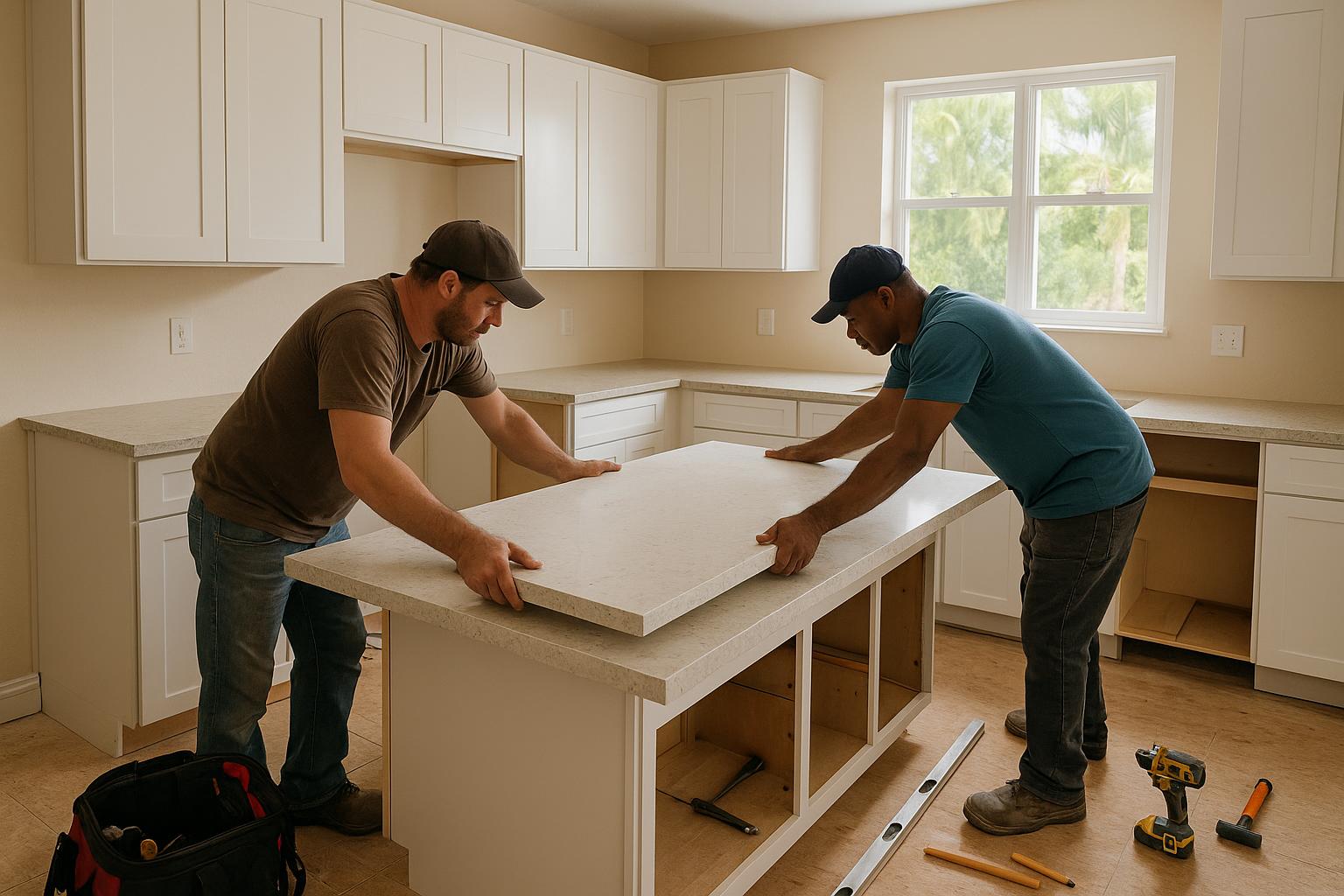
Phase 5: Cabinets, Countertops, and Major Installations (2–3 Weeks)
Now the kitchen starts to take shape. Custom cabinetry is installed first, followed by countertop templating and fabrication. There's usually a gap of several days between cabinet installation and countertop installation because stone and quartz countertops need to be precisely measured and cut after the cabinets are in place.
This is one of the most common sources of timeline confusion. Homeowners sometimes wonder why countertops can't go in the same day as cabinets. The answer is precision — a perfect fit requires exact measurements of the installed cabinets, not estimates from a floor plan.
Phase 6: Tile, Flooring, and Backsplash (1–2 Weeks)
With cabinets and countertops in place, tile and flooring installation begins. Backsplash tile goes up, floor tile or luxury vinyl plank is laid, and the space starts looking like a real kitchen again.
Material availability matters here. Specialty tiles or imported materials can add lead time, so making these selections early in the design phase pays off.
Phase 7: Fixtures, Appliances, and Final Details (3–5 Days)
The final phase includes installing the sink and faucet, hooking up appliances, mounting light fixtures, adding hardware to cabinets, and completing any remaining trim or paint touch-ups. This is where every detail comes together.
A final inspection is scheduled, and once it passes, your kitchen is officially ready to use.
What Can Cause Delays?
Even with the best planning, some factors can extend your timeline:
- Material backorders: Supply chain issues can delay cabinets, countertops, or specialty tile. Ordering early helps.
- Hidden damage: Water damage, mold, or outdated wiring discovered during demolition may need to be addressed before work continues.
- Change orders: Changing your mind mid-project on layout, materials, or fixtures adds time. It's completely understandable, but it does affect the schedule.
- Permit delays: Occasionally, the permitting office takes longer than expected. A good contractor builds buffer time into the schedule for this.
How to Keep Your Remodel on Track
- Finalize all selections before construction begins. Every undecided detail is a potential delay.
- Communicate regularly with your contractor. Weekly check-ins keep everyone aligned.
- Be decisive. When questions come up during construction — and they will — quick decisions keep the momentum going.
- Trust the process. There will be days when it looks like chaos. That's normal. A skilled team knows how to bring it all together.
Ready to Start Planning?
If you're a homeowner in Coral Springs, Parkland, Coconut Creek, or the surrounding area and you've been thinking about a kitchen remodel, the best time to start planning is now. The sooner you begin the design and selection process, the sooner you'll be cooking in a kitchen you actually love.
At Broadleaf Home Extension, we give every client a detailed project timeline before any work begins — no vague promises, no guesswork. Reach out to schedule a consultation, and we'll help you understand exactly what your project will look like from start to finish.